
Introduction
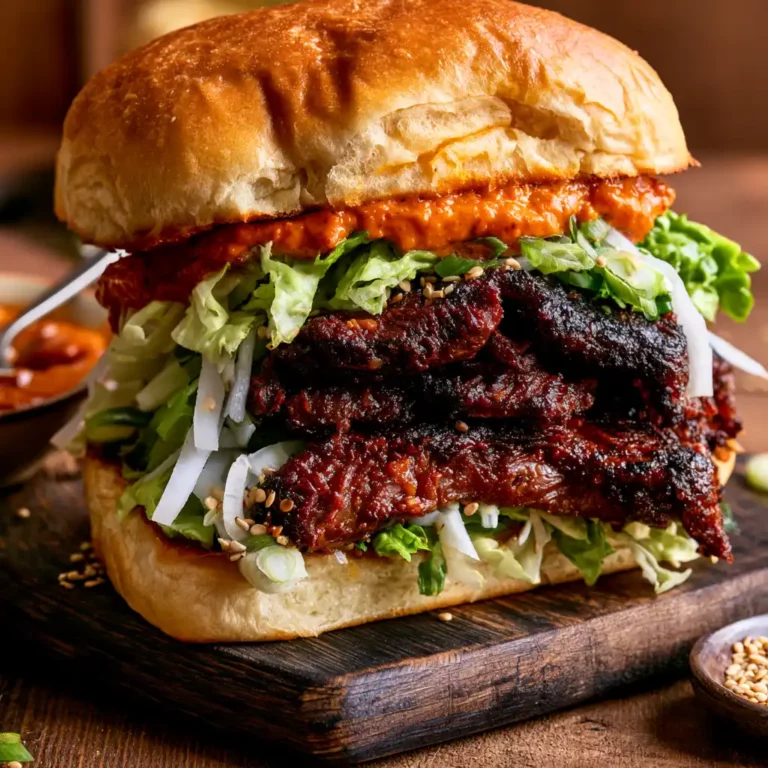
This Korean Steak Sandwich is the recipe I make when I want something that hits every flavor note simultaneously — deeply savory, slightly sweet, garlicky, with a touch of heat — all wrapped inside a toasted brioche bun with a quick gochujang aioli, crispy pickled daikon, shredded romaine, and a scatter of sesame seeds that makes every bite crunch, melt, and pop with flavor in a way that standard steak sandwiches simply cannot.
What makes this korean steak sandwich recipe easy so genuinely addictive is the bulgogi-inspired marinade on the steak. Soy sauce, sesame oil, brown sugar, garlic, ginger, and a splash of Asian pear juice or grated pear — the same flavor combination that makes Korean bulgogi so compelling — caramelizes as the thinly sliced steak hits a screaming hot cast iron and creates those slightly charred, sticky, sweet-savory edges that are impossible to replicate with any other method. The whole sandwich tastes like a Korean steakhouse crossed with the world’s best sandwich shop.
This is the sandwich I make for weekend dinners when I want something genuinely impressive, for gatherings where I need something that disappears instantly, and for any occasion where I want to cook something that earns conversation. If you love the Korean-American fusion sandwich direction and want a similar bulgogi flavor in a cheesesteak format, this spicy kimchi bulgogi cheesesteak uses the same bulgogi beef with kimchi and melted provolone in a hoagie roll for a spicier, cheesier direction.
Why You’ll Love This Recipe
This Korean Steak Sandwich uses a 30-minute marinade that produces genuinely deep, complex flavor — brief enough for a weeknight, long enough to penetrate the surface of the steak completely.
The gochujang aioli takes 3 minutes to make from pantry staples — mayonnaise, gochujang paste, sesame oil, garlic, and lime — and produces a sauce with restaurant-quality depth that makes everything it touches taste significantly more sophisticated.
This korean steak sandwich recipe easy uses thinly sliced sirloin or ribeye that cooks in under 3 minutes per side — the entire active cooking window for the steak is under 6 minutes once the pan is hot.
The quick pickled daikon — grated daikon soaked in rice vinegar, sugar, and salt for 20 minutes — provides the essential acidic crunch that cuts through the richness of the marinated steak and aioli without requiring any advance planning beyond starting it at the beginning of the recipe.
The sandwich format makes this ideal for feeding 4 to 6 people efficiently — all the steak cooks in two quick batches and the assembling takes 3 minutes per sandwich.
Advertisements
About the Ingredients
Steak
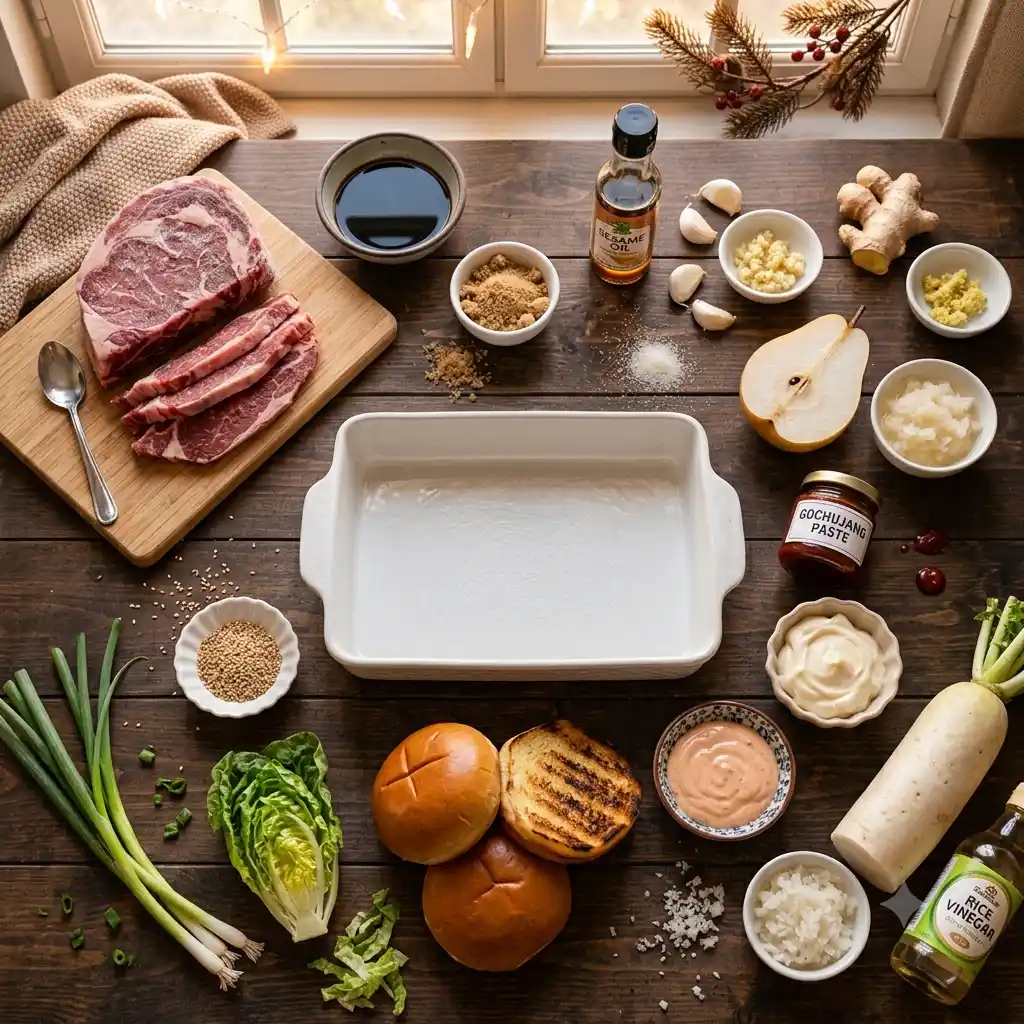
Thinly sliced boneless ribeye or sirloin is the ideal cut for this Korean Steak Sandwich — the natural marbling in ribeye produces exceptional flavor and stays juicy even at the high heat needed for proper caramelization, while sirloin is leaner and equally good if you prefer a less rich result. Freeze the steak for 20 to 30 minutes before slicing — a partially frozen steak slices significantly more cleanly into thin, uniform pieces than room-temperature steak, which tends to compress and tear. Aim for ⅛-inch thickness or thinner — this is what allows the marinade to caramelize rather than steam during cooking.
Bulgogi Marinade
The marinade is the flavor backbone of this korean steak sandwich recipe easy recipe. Soy sauce adds deep umami saltiness. Brown sugar provides the caramelization and slight sweetness that gives bulgogi its characteristic sticky glaze. Sesame oil adds a nutty, fragrant depth that’s unmistakably Korean. Garlic and fresh ginger add aromatic pungency that mellows beautifully as they cook against the hot pan. Grated Asian pear or a tablespoon of pear juice tenderizes the surface of the steak through its natural enzymes and adds a subtle, sweet complexity — grated kiwi works identically as a substitute and is more widely available. Marinate for at least 30 minutes. According to Maangchi’s classic bulgogi recipe — the most-viewed Korean cooking resource in English — the Asian pear or kiwi is the element that distinguishes genuinely tender bulgogi from chewy stir-fried beef, as its natural enzymes break down the surface proteins of the steak during the marinating period.
Advertisements
Gochujang Aioli
The gochujang aioli is the sauce that makes this easy korean bulgogi steak sandwich lunch dinner recipe genuinely distinctive. Gochujang — Korean fermented chili paste — adds a slow, complex heat that’s more nuanced and fermented than any other hot sauce, with an underlying sweetness and umami that amplifies rather than overpowers the bulgogi flavor. Mix 3 tablespoons of mayonnaise with 1 tablespoon of gochujang, ½ teaspoon of sesame oil, ½ teaspoon of garlic powder, and a squeeze of lime for a sauce that works on everything — spread generously on both inner surfaces of the bun.
Quick Pickled Daikon
Grated or julienned daikon radish soaked in rice vinegar, sugar, and salt for 20 minutes creates the bright, acidic crunch that is the structural counterpart to the rich bulgogi steak and creamy aioli in this Korean Steak Sandwich. Daikon is mild and slightly sweet on its own — the pickling brine transforms it into a clean, acidic, crunchy element that cuts through every rich component in the sandwich. If daikon is unavailable, thinly sliced Persian cucumber pickled in the same brine is an excellent substitute.
Advertisements
Brioche Bun
A soft, slightly sweet brioche bun toasted golden on the cut side in the same cast iron skillet used for the steak — picking up any caramelized bulgogi residue from the pan — is the ideal bread for this korean steak sandwich recipe easy sandwich. The slight sweetness of the brioche complements the bulgogi’s brown sugar glaze. Pretzel buns and Japanese milk bread (shokupan) rolls are excellent alternatives. Toast cut-side down for 60 seconds in the hot pan until golden — the residual bulgogi fond adds enormous flavor to the toasted surface.
Shredded Romaine and Sesame Seeds
Crisp, cold shredded romaine adds the cooling crunch that contrasts with the warm, sweet-savory steak in this Korean Steak Sandwich. A scatter of toasted sesame seeds over the assembled sandwich adds fragrance, visual interest, and a nutty crunch that echoes the sesame oil in the marinade and aioli. Sliced green onions added over the steak layer add a fresh, mild onion note that brightens every bite.
Tips and Tricks
Get the cast-iron skillet or wok genuinely screaming hot before the steak goes in — the caramelization that defines bulgogi flavor happens in the first 30 to 60 seconds of contact with a very hot surface in this Korean Steak Sandwich. Medium heat produces stewed, pale-colored beef rather than the charred, caramelized steak that makes this sandwich exceptional.
Cook the steak in small batches — no more than one layer at a time. Overcrowding drops the pan temperature immediately and produces steamed rather than seared beef. The entire steak cooks in 2 to 3 batches of under 3 minutes each in this korean steak sandwich recipe easy recipe.
Pat the marinated steak pieces dry with paper towels before cooking — excess marinade moisture prevents caramelization and causes splattering. A brief pat dry is the most impactful single technique for better caramelized results.
Toast the buns in the same pan after cooking the steak — the residual bulgogi fond and caramelized marinade on the pan surface transfers directly to the cut face of the bun and adds a layer of flavor that makes the finished sandwich taste considerably more complex.
Pro Tips
Add a thin layer of kimchi beneath the steak layer in this Korean Steak Sandwich for a spicy, fermented depth that pairs exceptionally well with the bulgogi marinade and gochujang aioli — the combination is genuinely one of the best possible flavor combinations in a sandwich.
Rest the cooked steak for 3 minutes before assembling — slicing or piling steak immediately causes the juices to run and the bottom bun becomes soggy within minutes.
Grate the Asian pear or kiwi on the fine holes of a box grater rather than processing — fine grating produces a paste that coats every piece of steak uniformly, while coarser grating leaves uneven chunks that don’t tenderize consistently in this easy korean bulgogi steak sandwich lunch dinner recipe.
Double the gochujang aioli — it keeps in the refrigerator for 2 weeks and works as a dipping sauce for fried chicken, a spread for grain bowls, a drizzle for roasted vegetables, and a dip for dumplings throughout the week.
Step-by-Step Instructions
- Freeze and slice the steak: Freeze ribeye or sirloin for 20 to 30 minutes. Slice as thin as possible — ⅛ inch or thinner — against the grain.
- Make the bulgogi marinade: Whisk together 3 tablespoons of soy sauce, 1 tablespoon of brown sugar, 1 tablespoon of sesame oil, 3 minced garlic cloves, 1 teaspoon of freshly grated ginger, and 2 tablespoons of grated Asian pear or kiwi. Toss the sliced steak in the marinade. Refrigerate 30 minutes minimum.
- Make the quick pickled daikon: Combine 1 cup of grated or julienned daikon with 3 tablespoons of rice vinegar, 1 teaspoon of sugar, and ½ teaspoon of salt. Toss and let sit 20 minutes. Drain before using.
- Make the gochujang aioli: Whisk together 3 tablespoons of mayonnaise, 1 tablespoon of gochujang paste, ½ teaspoon of sesame oil, ½ teaspoon of garlic powder, and a squeeze of lime. Refrigerate until serving.
- Cook the steak: Pat marinated steak dry with paper towels. Heat a cast-iron skillet over the highest heat until smoking. Cook steak in thin single-layer batches — 1 to 2 minutes per side until charred and caramelized. Do not overcrowd. Set cooked steak aside to rest 3 minutes.
- Toast the buns: In the same hot skillet, place brioche buns cut-side down for 60 seconds until golden, picking up the caramelized bulgogi residue from the pan.
- Assemble: Spread gochujang aioli generously on both cut surfaces. Layer shredded romaine on the bottom bun. Add the rested bulgogi steak. Top with drained pickled daikon, sliced green onion, and toasted sesame seeds.
- Serve immediately.
Variations
Spicy kimchi version: Add a generous layer of kimchi beneath the steak for a spicy, fermented direction in this Korean Steak Sandwich that’s especially popular with anyone who loves heat.
Cheese version: Melt a slice of provolone or American cheese over the steak in the pan during the final 30 seconds of cooking — cover the pan with a lid to trap steam and melt the cheese quickly for a Korean steak cheesemelt direction.
Lettuce wrap version: Skip the bun entirely and serve the bulgogi steak with gochujang aioli, pickled daikon, and sesame seeds in large butter lettuce cups for a low-carb, gluten-free version that’s equally satisfying in this korean steak sandwich recipe easy recipe.
Chicken version: Substitute thinly sliced boneless chicken thighs in the same bulgogi marinade for a lighter, equally flavorful Korean chicken sandwich in this easy korean bulgogi steak sandwich lunch dinner direction.
Breakfast version: Top the bulgogi steak with a fried egg and gochujang aioli on a toasted brioche bun for a Korean-inspired breakfast sandwich that’s genuinely extraordinary.
How to Store
Store components separately for the best results — cooked bulgogi steak keeps refrigerated in an airtight container for up to 3 days and reheats beautifully in a hot skillet for 60 to 90 seconds to restore the caramelized crust. The gochujang aioli keeps refrigerated for up to 2 weeks. The quick pickled daikon keeps refrigerated for up to 5 days and actually improves as it sits.
Assemble sandwiches fresh — assembled sandwiches do not store well as the buns absorb moisture from the steak and aioli within 30 minutes.
Freeze the marinated raw steak (before cooking) for up to 2 months in zip-lock bags. Thaw overnight in the refrigerator and cook from cold — add 1 minute of extra cooking time per batch.
Frequently Asked Questions
What steak cut works best for this Korean Steak Sandwich?
Thinly sliced ribeye gives the most flavorful result due to its marbling. Sirloin is an excellent leaner alternative. Skirt steak sliced very thin works beautifully and is especially budget-friendly. The key is thin slicing — ⅛ inch or thinner — regardless of cut.
Can I use a regular blender or food processor instead of grating the pear?
Yes — blend or process ½ of a peeled Asian pear until smooth and use 2 tablespoons of the paste. Fine grating is simply easier and more efficient for small quantities in this korean steak sandwich recipe easy recipe.
How spicy is gochujang?
Gochujang has a slow, fermented, complex heat rather than sharp immediate spice. The 1 tablespoon in the aioli produces a mild to moderate heat — increase to 1½ tablespoons for more assertive spice or reduce to 2 teaspoons for a milder result.
Can I grill instead of pan-sear?
Yes — a very hot grill works beautifully and adds additional smokiness. Cook the thin steak slices in a grill basket or directly on the grates if they’re thick enough to hold together. The caramelization effect is slightly less dramatic than cast iron but equally delicious.
Where do I find gochujang and daikon?
Both are widely available in Asian grocery stores. Gochujang is increasingly found in the international aisle of major grocery stores (Whole Foods, Kroger, Target). Daikon is in the produce section of Asian markets and many conventional supermarkets.
What can I serve alongside this Korean Steak Sandwich?
This sandwich is a complete meal on its own. For a Korean-inspired appetizer to serve before the sandwiches, these easy crab rangoon egg rolls use the same Asian-fusion flavor direction in a crispy fried format that pairs naturally with the bulgogi sandwich at any gathering.
Korean Steak Sandwich
Equipment
- Cast iron skillet or heavy skillet
- Box grater (for pear and daikon)
- Zip-lock bag or bowl (for marinating)
- Sharp knife and cutting board
- Tongs
Ingredients
Bulgogi Steak
- 1.5 lbs boneless ribeye or sirloin steak frozen 20 to 30 min then sliced ⅛-inch thin against the grain
- 3 tbsp soy sauce
- 1 tbsp brown sugar
- 1 tbsp sesame oil toasted
- 3 cloves garlic, minced
- 1 tsp fresh ginger, grated
- 2 tbsp Asian pear or kiwi, finely grated tenderizes the steak
Gochujang Aioli
- 3 tbsp mayonnaise
- 1 tbsp gochujang paste adjust for heat preference
- 0.5 tsp sesame oil
- 0.5 tsp garlic powder
- squeeze of fresh lime
Quick Pickled Daikon
- 1 cup daikon radish, grated or julienned
- 3 tbsp rice vinegar
- 1 tsp granulated sugar
- 0.5 tsp salt
For Serving
- 4 brioche buns toasted cut-side down in the same skillet after steak
- 2 cups romaine lettuce, shredded
- 3 green onions, thinly sliced
- 2 tbsp toasted sesame seeds
Instructions
- Freeze steak 20 to 30 minutes. Slice ⅛-inch thin against the grain. Toss with all bulgogi marinade ingredients. Refrigerate 30 minutes minimum.
- Quick pickle the daikon: combine grated daikon with rice vinegar, sugar, and salt. Toss and let sit 20 minutes. Drain before serving.
- Make the gochujang aioli: whisk together mayonnaise, gochujang, sesame oil, garlic powder, and lime juice. Refrigerate until serving.
- Pat marinated steak dry with paper towels. Heat cast iron skillet until smoking over highest heat. Cook steak in thin single-layer batches — 1 to 2 minutes per side until charred and caramelized. Do not overcrowd. Rest 3 minutes.
- In the same hot skillet, toast brioche buns cut-side down for 60 seconds until golden, picking up the caramelized bulgogi residue.
- Assemble: spread gochujang aioli on both bun surfaces. Layer shredded romaine on the bottom bun. Add rested bulgogi steak. Top with drained pickled daikon, sliced green onion, and toasted sesame seeds. Serve immediately.
Notes
Advertisements